
What does a narrative designer do on games like WoT: HEAT
yes, the game is out!
The game I spent three years working on is finally out.
A quick disclaimer, though: as is often the case in game development, not everything I did on made it into the final release. Narrative designers on projects like this heavily depend on other teams, pipelines, and production constraints. You can’t simply sit down, write a cute little Ink script or a blueprint sequence, and drop it into the game — especially when you’re working with a brand-new proprietary engine.
I call games like HEAT (PvP, live service, etc.) narrative-supported: narrative serves gameplay rather than driving it. Our main goal is to support the gameplay, create emotions beyond the mechanics, and give players reasons to come back.
What can narrative design contribute to a PvP live-service shooter
Unlike the “big tanks” (World of Tanks), HEAT was conceived as a hybrid between a tank game and a hero shooter. Tanks exist in a realistic, grounded world inspired by historical events. The project originally carried the working title Cold War. When I joined, the setting revolved around an alternate Cold War narrative, telling stories that felt a bit like The X-Files meets Bridge of Spies—just without the aliens; not scifi, but speculative realism. And, unlike traditional tank games, it had heroes.
Setting and Environmental Storytelling
In games like this, environmental storytelling is one of our primary tools. Players revisit the arena over and over, and this is our opportunity to help them avoid boredom and discover more about the world. We start at the greybox stage in collaboration with level designers and continues through production with level and environment artists.
Unfortunately, HEAT is not a good showcase of this work. The designs were created, but there wasn’t enough time and resources to fully implement them. For an elegant example of environmental storytelling, take a look at Arc Raiders.
Characters and Voice Lines
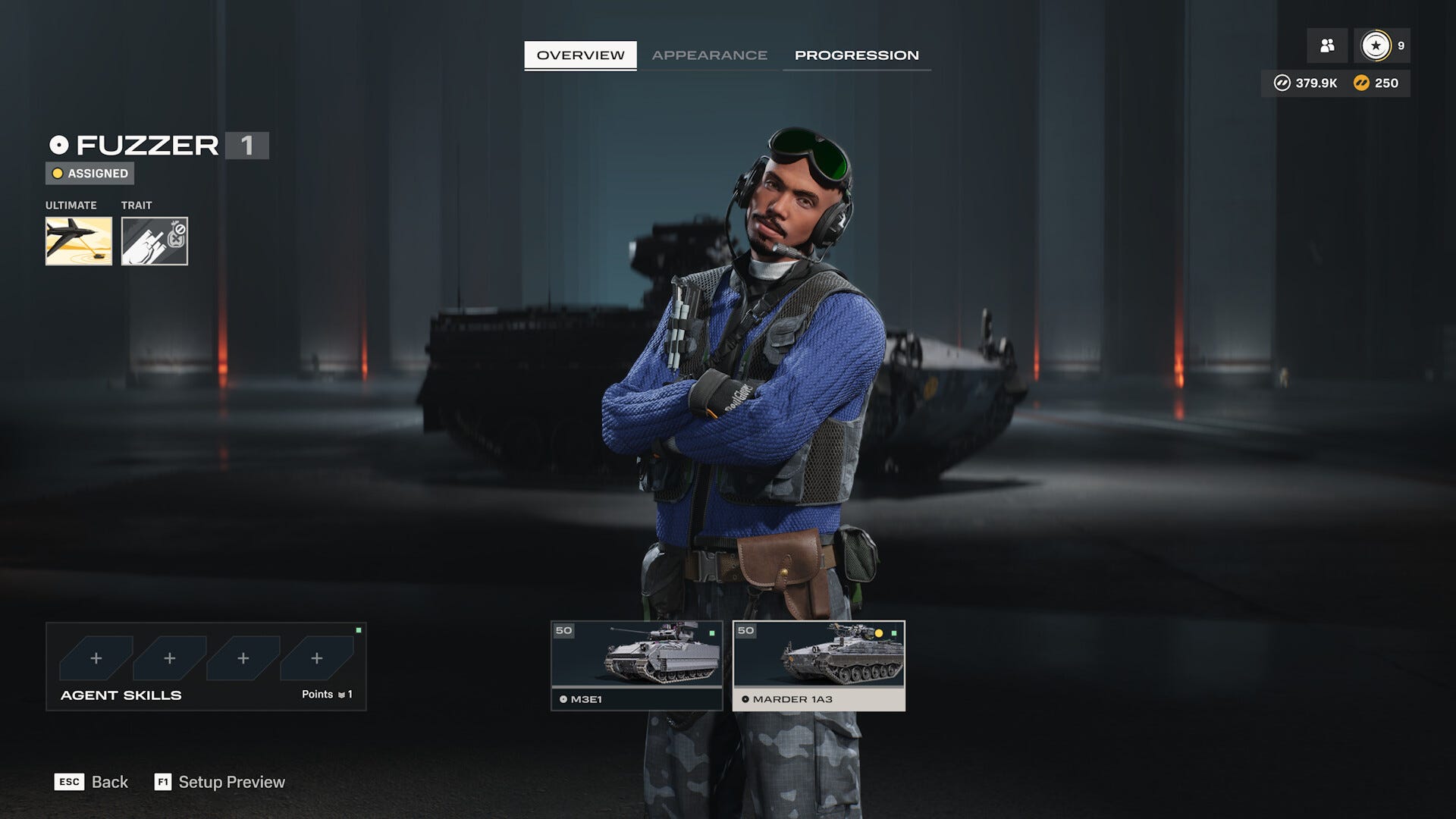
It all starts with working together with game designers to create characters that will embody their gameplay roles and abilities. Then we provide the art department with the character profile and references and help them iterate, from concept to the final model, and related cosmetics.
Our second major tool is character dialogue. A classic example is Overwatch, where voiceline interactions run so deep that attacking this specific enemy with this specific weapon while leaping in the air can trigger a unique dialogue line. In practice, however, voice systems’ main job is to communicate information during fast-paced combat, which means a large part of narrative design is setting priorities.
My principle is to tell the players not the backstory, but the frontstory whenever possible. I want them see characters developing through ongoing seasonal content. This kind of design can be effectively supported through tools such as Ink integration.
FTUE
FTUE (First-Time User Experience) was another area where I worked across the entire player journey: from the opening cinematic (the version currently in the game is a simplified one; my original version was featured in both alpha tests and the LSP), through the first battle, and into the outro experience. The narrative’s job here is to show players who they are in this world, where they are, and why the hell do they have to shoot this pretty railgun tank.
Seasons and Live-Service Storytelling
Finally, there are seasons. Narrative designers develop the story arcs that span seasons and events, much like seasons in a television series. “Story as a reward” works nice for this: players can unlock narrative content through progression and achievements: artefacts that reveal more about the world and its characters, from cosmetic items to codex entries, and cinematics.
In live games, players are often asking: what’s the endgame here? Even though it sounds like an oxymoron, this is what narrative designers do: although there’s no literal end, there’s always meaning guiding players forward.